
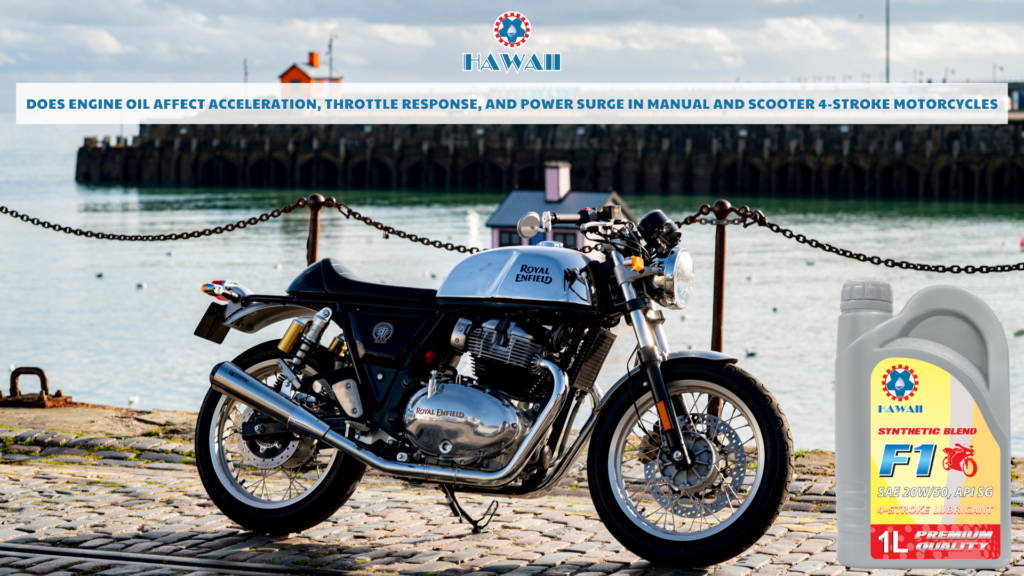
Does Engine Oil Affect Acceleration, Throttle Response, And Power Surge In Manual And Scooter 4-Stroke Motorcycles
1. A proper lubrication layer allows the engine to spin smoothly and respond faster to throttle input
Acceleration, throttle response, and the sense of power when riding a motorcycle are heavily influenced by how smoothly the internal engine components interact. When parts like the piston, crankshaft, and camshaft move in a well-lubricated environment, internal friction is significantly reduced. This enables the engine to react quickly when the throttle is opened, providing instant power and a noticeable surge. On the other hand, if the lubrication has deteriorated, internal resistance rises, making the engine feel sluggish or delayed in response—even when the rider twists the throttle aggressively. This effect is especially noticeable in scooters when climbing hills or accelerating rapidly in city traffic.
2. The engine feels stronger and more responsive when friction loss is minimized through proper lubrication
Both manual and automatic (scooter) 4-stroke motorcycles transmit power through a complex system of gears, clutches, and rotating shafts. For the engine’s power to reach the wheels efficiently, these components must operate with minimal resistance. If the lubrication inside the engine is old or no longer performing well, friction increases in areas like the combustion chamber, clutch, and gear train. This leads to power loss before it even reaches the rear wheel, reducing the “punchy” feeling during acceleration. The result is a noticeable dip in performance, especially when the bike is under load, climbing an incline, or accelerating from a full stop. An effective lubricant acts like a transmission booster, ensuring energy is delivered smoothly and with maximum impact.
3. Stable oil helps maintain consistent torque output, enabling smoother and stronger acceleration
Acceleration isn’t just about how fast a bike can start moving—it’s also about maintaining momentum as the engine revs up. When all moving parts inside the engine are well-lubricated, components like the valves, timing chain, and rotating shafts can work in harmony. This consistent mechanical performance translates into a smoother torque curve and more linear acceleration. In scooters, where automatic transmissions rely heavily on engine response, smooth and predictable torque delivery enhances overall ride quality. Ensuring the oil is always at the right level and condition is key to achieving this seamless power delivery, making the bike feel responsive and agile at every speed.
4. Engine power surge relies heavily on cooling and thermal control from the oil
When a motorcycle is pushed hard—whether during spirited riding, long-distance travel, or stop-and-go traffic—engine temperatures can rise rapidly. If this heat isn’t managed effectively, performance begins to drop. In such cases, the oil acts as a secondary cooling agent, helping dissipate heat from critical zones such as the combustion chamber and transmission system. High-quality lubrication maintains thermal stability, preventing overheating that could otherwise reduce engine output and dull throttle response. This allows the rider to enjoy consistent power even after repeated acceleration or when restarting from a red light, maintaining that satisfying “surge” of performance.
5. A sporty, responsive ride is largely shaped by how effectively the engine is lubricated
Many riders believe that a bike’s sporty feel or quick throttle response comes purely from horsepower or transmission design. In reality, even a powerful engine can’t perform at its best without proper lubrication. A stable oil film minimizes mechanical drag, ensuring that every twist of the throttle translates into immediate engine feedback. The rider experiences a bike that “grabs the throttle” and pulls forward eagerly, without hesitation. This is especially critical in urban settings where traffic requires quick maneuvering and frequent changes in speed. In both manual and automatic motorcycles, lubrication quality is a defining factor in how alive and responsive the engine feels.
Conclusion
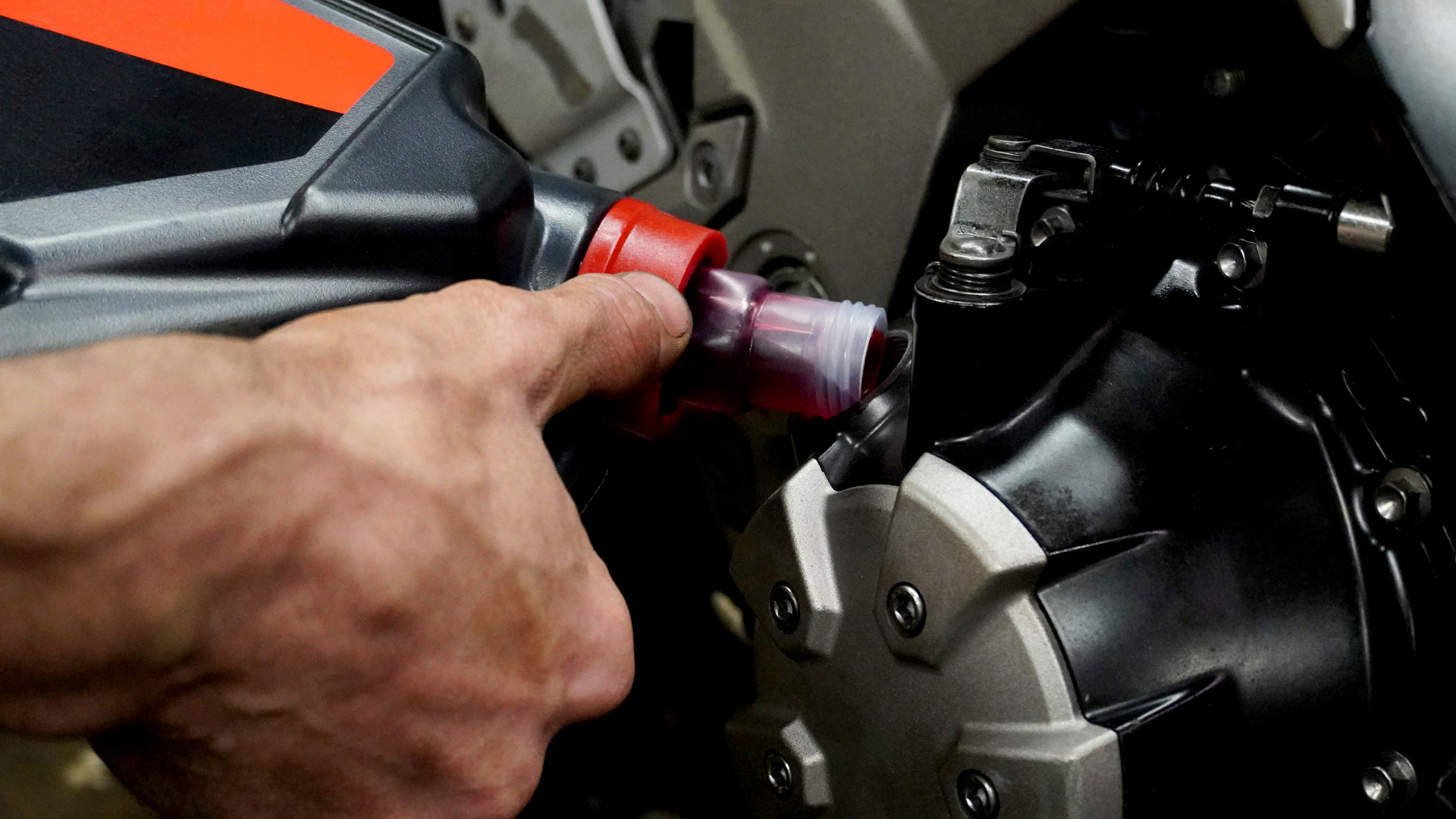
Engine oil plays a far more active role than just preventing wear and tear. It has a direct impact on how well a 4-stroke motorcycle—manual or scooter—accelerates, responds to throttle input, and maintains power under load. A well-lubricated engine runs smoother, delivers power more efficiently, and keeps cool under pressure, all of which enhance ride quality and performance. On the flip side, degraded or ineffective lubrication leads to delayed acceleration, overheating, and poor throttle response. For riders who value performance, comfort, and safety, regular maintenance and oil condition monitoring are essential. Ensuring optimal lubrication means ensuring the engine performs at its full potential every time you hit the road.
 Contact us