
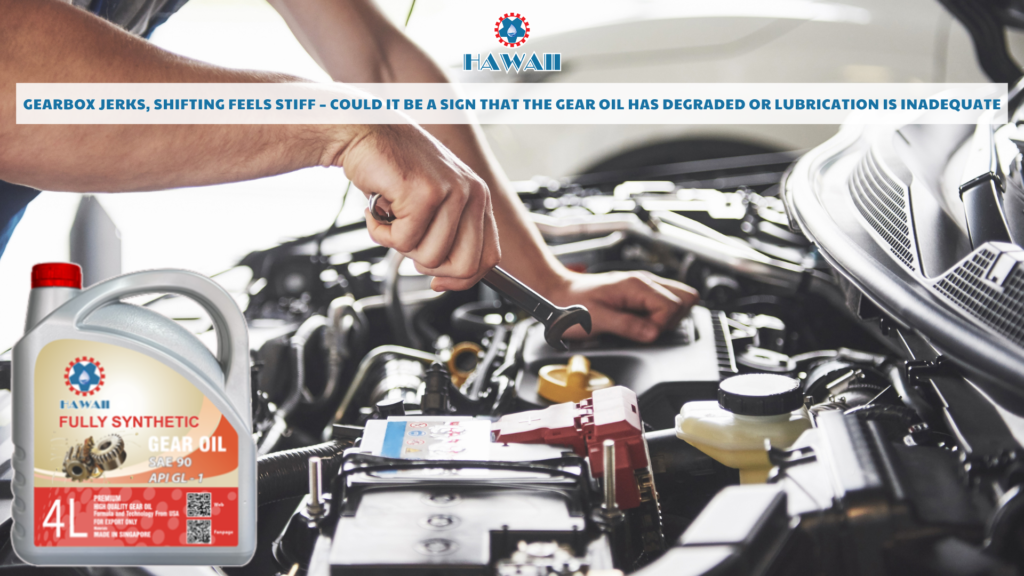
Gearbox Jerks, Shifting Feels Stiff – Could It Be a Sign That the Gear Oil Has Degraded or Lubrication Is Inadequate
1. Stiff shifting may be an early sign of excessive friction inside the gearbox
When your vehicle starts experiencing difficulty during gear changes—such as requiring more force to shift or the lever getting stuck—there’s a high chance that internal friction between components is increasing. The gearbox consists of gears, shafts, and synchronizers working continuously, which demand a stable layer of lubrication to operate smoothly. If the lubrication is compromised—either due to oil degradation or poor distribution—these components begin to resist motion, leading to a jerky, rough gear shift. This is a technical red flag indicating that the transmission system should be inspected promptly to avoid further damage.
2. Degraded or low-quality lubricant reduces the gearbox’s ability to regulate friction
Lubricant in the gearbox doesn’t just reduce friction—it also helps distribute force evenly between moving parts. Over time, if the oil isn’t changed or properly maintained, its chemical structure and viscosity degrade. This breakdown prevents the formation of an adequate lubrication film between contact surfaces, increasing metal-to-metal contact. The result is a stiff, delayed, or even grinding gear shift that can be accompanied by unpleasant sounds. Left unchecked, this not only degrades performance but also accelerates wear on critical components like gear teeth and synchronizers.
3. Jerking during shifting may result from uneven lubricant distribution
Sometimes, even when oil is present, it’s not effectively reaching all the key areas inside the gearbox. Blockages, foaming, or reduced oil pressure can cause certain components to be starved of lubrication. This leads to “dry” zones within the system, where friction spikes abruptly—especially noticeable when shifting at low speeds or between low gears. This uneven lubrication can make the transmission feel jerky or hesitant and may be mistaken for mechanical failure. If ignored, this condition may result in stripped gears or even total gearbox failure.
4. Lack of maintenance can lead to overheating and gear misalignment
Besides lubricating, the oil inside a gearbox plays a crucial role in cooling the system during prolonged use. If the oil degrades or circulation becomes poor, heat builds up inside the transmission. Rising temperatures can distort parts like gear teeth, bearings, and seals—causing alignment issues and making gear shifting more difficult. Drivers may notice that shifting becomes stiffer as the car warms up. Without timely maintenance, such issues can escalate, leading to severe and costly mechanical failures.
5. A heavy gear shift feel is a clear signal to inspect the entire lubrication system
If shifting becomes consistently stiff or you feel a mechanical resistance when changing gears, it’s a strong sign that the lubrication system needs inspection. This includes not only replacing the gear oil but also checking the pump, filters, and internal fluid pathways. Simply changing the oil without addressing underlying issues like clogs or worn seals may not restore full performance. A thorough inspection ensures proper fluid flow, protects gear engagement surfaces, and prevents premature wear and breakdowns.
Conclusion
A jerky gearbox and stiff gear shifting are more than just driving inconveniences—they’re warnings of potential lubrication failure inside your transmission. When gear oil degrades or is unevenly distributed, the system can no longer operate efficiently, leading to increased friction, overheating, and accelerated wear. Routine inspection and timely maintenance aren’t optional—they’re essential for ensuring smooth shifting, minimizing repair costs, and preserving long-term vehicle performance. Addressing early signs today will save you from major gearbox repairs tomorrow.
 Contact us